

Understanding Pant Break

What “Pant Break” Means
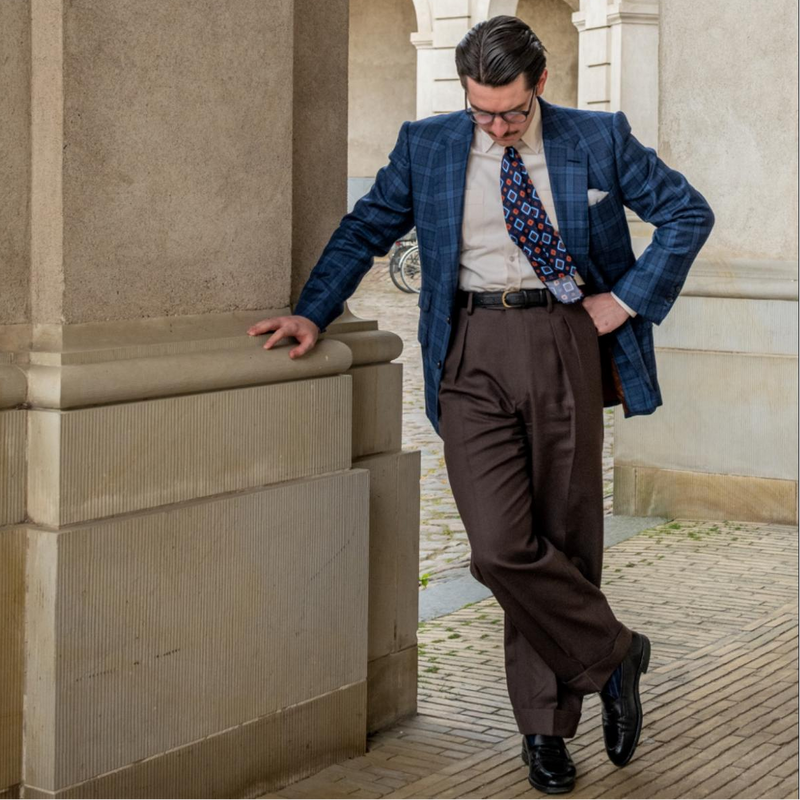
In classic tailoring, the pant break refers to the slight fold or crease that forms where a trouser leg meets the shoe. It’s the point where the clean line of the trouser “breaks,” creating a subtle interruption in the drape.
This small feature carries significant weight: the amount of break influences how long your legs appear, how crisp your trousers look, and how modern – or traditional – the entire outfit feels.
What Determines the Break
1. Trouser Length (Inseam)
The single greatest factor. A longer inseam means more fabric resting on the shoe, producing a deeper break or even pooling. Shorten the inseam slightly, and the line sharpens immediately.
2. Leg Opening Width
A wider hem drapes more softly and hides the break within its fold. A narrower, tapered leg exaggerates it, creating a sharper “dent” at the front of the shoe. The slimmer the leg, the higher and cleaner the break appears.
3. Shoe Height & Shape
Shoes with taller heels or more structured vamps push the hem upward, reducing break. Low-profile loafers or sneakers create more contact and deeper folds. The relationship between shoe and trouser hem is dynamic – always consider both together.
4. Posture & Movement
Fit should be judged while standing naturally. Movement will naturally lift or shift the hem, but the standing line is the reference point.
The Four Main Types of Pant Break and How to Wear Them
1. Full Break
The hem extends well past the laces, creating a deep fold across the front and noticeable pooling at the back.
Tone: Traditional, relaxed, conservative.
Best with: Classic or fuller cuts, heavier wools, and traditional tailoring.
2. Half Break (Medium Break)
The fabric rests lightly on the shoe, forming one clean fold with no pooling behind the heel.
Tone: Balanced, versatile, timeless.
Best with: Most modern trousers and business attire – this is the safest “default” break.
3. No Break (Minimal Break or “Kiss”)
The hem just touches the top of the shoe, forming almost no crease. The line stays sharp and vertical.
Tone: Contemporary, neat, and precise.
Best with: Slim-cut trousers, tapered legs, or lighter fabrics; ideal for modern business and evening wear.
4. Negative Break (Showing Ankle)
The hem sits above the shoe, revealing a hint of ankle or sock and avoiding contact entirely.
Tone: Fashion-forward, casual, and statement-driven.
Best with: Cropped, unstructured, or warm-weather trousers – less appropriate for conservative settings.
How to Choose the Right Break
1. Match to Your Build
-
Tall or slim: Can pull off shorter breaks without looking undersized.
-
Broader or shorter: Slightly longer hems elongate the line, avoiding a cropped effect.
2. Match to the Trouser Cut
- Narrow legs favor minimal or no break.
- Fuller legs balance better with half or full break.
- A heavy drape (flannel or wool) often benefits from more length; lightweight cotton or linen thrives with less.
3. Match to the Shoe & Occasion
-
Formal business attire: Half break or soft full break feels natural.
-
Modern tailoring or creative workwear: No break gives clarity and energy.
-
Casual or resort dressing: Cropped or ankle-revealing trousers work well with loafers or sneakers.
4. Match to Personal Style
If you lean classic, choose a medium or full break. If your aesthetic is modern and sharp, lean toward less break. The goal is harmony between trouser cut, shoe, and your overall silhouette – never following a trend blindly.
Common Mistakes to Avoid
-
Too Long: Multiple folds or pooling look unkempt, dated, and shorten the leg line.
-
Too Short: An unintended ankle flash can look like a laundry mishap, not a style choice.
-
Wrong for the Context: No-break trousers at a conservative board meeting – or full-break flannels with loafers – can throw off proportion.
-
Ignoring Movement: Try trousers on with shoes, sit and stand. What looks fine standing may rise too high when walking.
The Takeaway
The pant break is a quiet but defining marker of good tailoring. It determines whether your trousers fall with elegance or distraction.
Choosing the right break is an exercise in proportion – between the leg, the shoe, and the setting. A single inch can shift a look from stiff to effortless, from sloppy to refined.
When in doubt, aim for the half break: it’s always clean, classic, and intentional. Then, once you’ve mastered that line, adjust by a fraction – up or down – to make it unmistakably your own. If you’re ready to go custom, take a look at some of our made-to-measure trousers here www.shepherds.com/collections/trousers and schedule your personal fitting consultation today.